

Dystopian Dances
Finding hope, and the passing of the generations.

For those of you who follow me on Facebook, you might know that one of my regular haunts each summer is the Royal Albert Hall and the BBC proms.
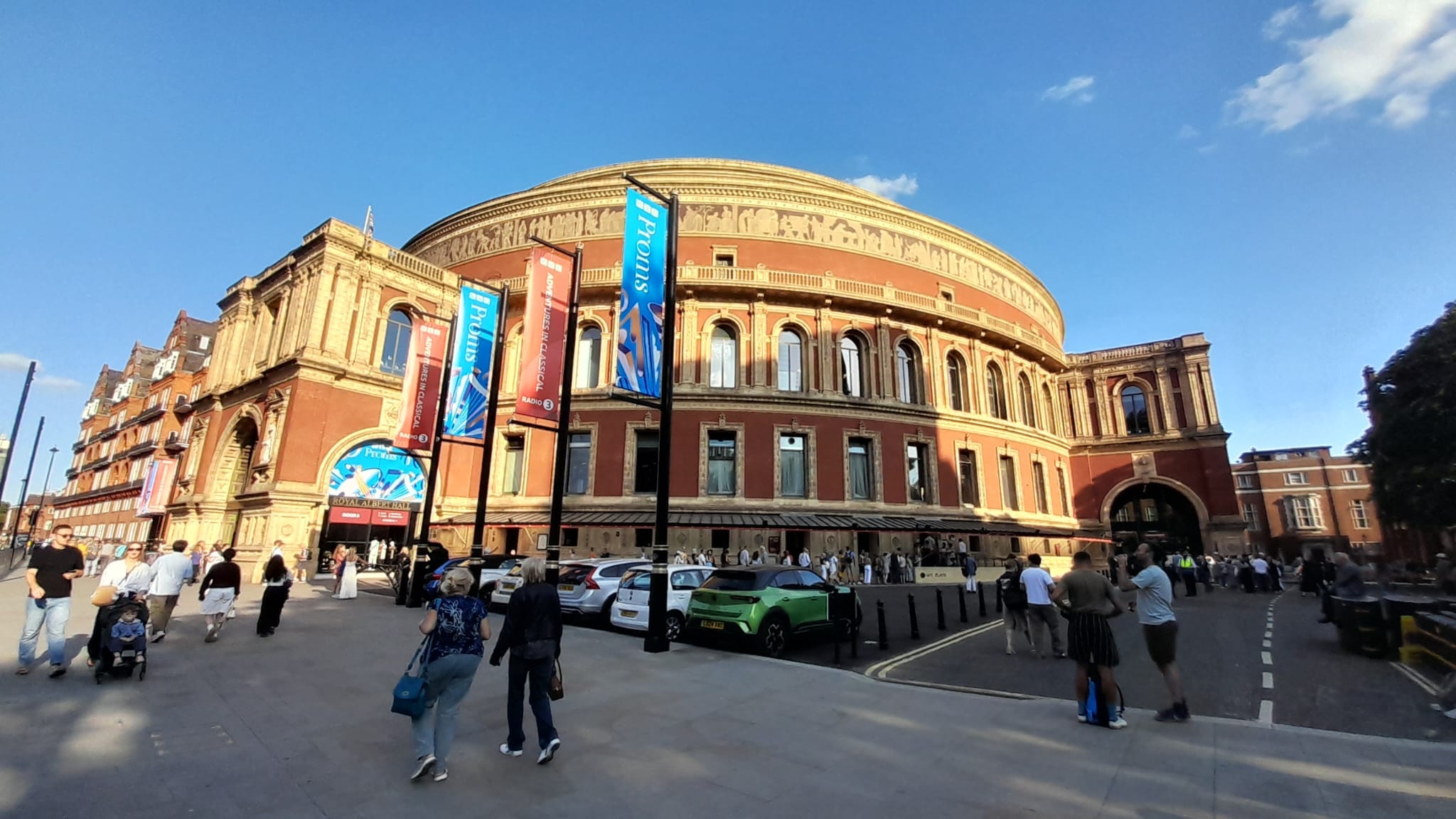
On the night that Spain won the World Cup, I was there to hear the National Orchestra of Spain perform, among other things, Ravel’s Bolero. The tune is an instantly recognisable one, with its repetitive rhythm, and you might think of ballroom dancing or figure-skating, but if you know it, you’ll know it is a dance tune with a twist.
I don’t think I’d ever heard it live before and as I was spotting which new instrument was added as the music built up, I was also trying to work out when the change in mood begins. As a viola player I think I’d have to say it’s when the violins come in but what do you think? (leave a comment below!) They seem to be saying “listen to us, we’ve perfected this now” but they don’t know when to stop, to take the foot off the gas.
When you know what is to come, you can almost see the collapse into madness as inevitable from the beginning, as each new entry is more frantic than the last. But Ravel could have composed it differently, kept it a jolly little dance piece, reached a climax and then calmed everything down again to relieve the tension. We expect this of music, that it comes back round again and leaves us feeling better. Ravel leaves me feeling disturbed.
Each repetition of the tune in Bolero seems to get more boastful, and celebratory, but in the end there’s nowhere left to go but a hideous key change and crowing trombones before a sudden collapse. Could he have carried on? Perhaps 100 years ago he didn’t have the musical language, or perhaps he’d said all he wanted to say. He’d already, after all, created a dystopian image 8 years earlier in La Valse, the chilling reimagining of the Viennese waltz in the years after the Great War.
In Bolero, it’s hard to tell when the triumph turns into hubris. It feels both inevitable, but also impossible to know when the point of no return has been passed.
The excessive heat this summer, culminating in wildfires in France and Spain seem to indicate that as far as the climate is concerned, this tipping point has been reached. We will never again have the seasons as we remember them from our childhood.
Sometimes I don’t know how to be hopeful anymore. At least, not if hope means “there’s still a chance we can stop this bad thing happening”
But actually, true hope isn’t about looking at the future and saying “it might still be alright”. It’s about turning towards what we will never lose - the goodness, beauty, love, community that we see now, and knowing that such things will last despite everything.
I don’t know why I’m drawn to Ravel at the moment, but perhaps it’s also the reason why I read apocalyptic fiction. I couldn’t read it all the time, that would be a bit much. But it seems to have a place, not just as a warning for what might happen, but as a way to visualise possible futures. It gives us something to imagine even as we know (and hope) things won’t happen exactly like that. For me it’s the uncertainty that’s the hardest.
I recently read Children of Men by PD James in which she imagines a future (in 2021!) where no child has been born for 25 years. (The film is very different and I think it is better). Spoiler alert – it ends with the birth of a baby, which, to my mind, is a beginning not an ending.

Like Ravel’s Bolero, I think most apocalyptic fiction ends too suddenly. Yes, the protagonists have reached safety, or conquered the immediate threat, but how do they survive in the changed world? Will it be better or worse than the old world? How do they rebuild? And in so doing, what do they discover about what it means, fundamentally, to be human.
The only book I’ve read that takes this theme is The Earth Abides by George R Stewart which was written in 1949. Almost all humans have died in a sudden pandemic and those that remain each have their own ideas of how to rebuild, but successfully work together to ensure their children and grandchildren survive. It takes the main character a while to realise that his university education is of no value for the immediate future of humanity!
In the end, all he can give his grandchildren are some very basic practical skills, a lot of love, and the strong foundations of a new community.
And so, I come back to a common theme of mine: grandparents and grandchildren. Last Sunday was the World Day for Grandparents and the Elderly and I wrote this piece which was published in Independent Catholic News.
Last week I became a great auntie. Congratulations to Emily and Paul on the birth of their beautiful baby daughter – and to my eldest sister who is now a grandmother!
This is just a few months after my last auntie died – and so life goes on.
One generation passes away, and another generation comes, but the earth abides for ever. (Ecclesiastes 1:4)